Seventy-eight percent of employers now monitor their workforce in some form (Digital.com, 2025). Yet when productivity dips — a missed deadline, a team that’s gone quiet, output that’s quietly dropped — most of those organizations still can’t answer one basic question: why?
The monitoring data is there, and the dashboards are running. Something is still missing.
Often, vendor marketing confuses two key concepts: employee monitoring and workforce analytics. They’re not the same, and they don’t do the same job. Using one while thinking you have the other leads to lots of data but few answers.
This article draws a clear line between the two, shows where they connect, and introduces a third category — workforce productivity intelligence — that modern platforms like TraqNext are built around.
What Is Employee Monitoring — and What Does It Actually Measure?

According to MeraMonitor (2025), most companies — about 96% — use time-tracking software, and 73% of employers monitor remote or hybrid workers. Employee monitoring captures how each person works: time spent on tasks, app usage, screenshots, idle periods, and keyboard and mouse activity — all in real time, at the individual level.
Think of monitoring as a data collection layer. It answers questions rooted in what is happening right now:
- Is this employee actively working or idle?
- Which applications are open and for how long?
- Has the team started their shift?
- How many hours were logged on this project this week?
These are important, legitimate questions — especially for distributed teams, BPO operations, and organisations with payroll tied directly to tracked hours. Indeed, a reliable employee monitoring tool that captures this data accurately is the foundation of accountable remote work.
TraqNext’s approach reflects this directly. Screenshots are captured by default, but admins can blur or disable them entirely. Employees know what’s tracked. The data stays within GDPR boundaries. TraqNext’s monitoring layer covers automatic time tracking, idle time detection, and app and site usage logging — giving teams accountability without anxiety.
What Is Workforce Analytics — and What Questions Does It Actually Answer?
Only 32% of organisations use predictive workforce analytics, yet 70% of employees interact with AI tools daily (JobsPikr, 2025). Workforce analytics takes the same underlying data that monitoring collects and transforms it into organisation-wide patterns, trends, and predictions. It doesn’t replace monitoring — it elevates it.
Monitoring shows an employee spent four hours in a spreadsheet tool. Analytics, however, asks the deeper questions: is that normal for this role, is it increasing, is it correlated with overtime, and is there a team-wide pattern that signals a workflow problem? In short, the shift is from individual data points to aggregated intelligence that drives decisions.
The analytics layer operates at three depths:
- Descriptive — what happened across the team last week
- Diagnostic — why productivity dipped in a particular period
- Predictive — which employees are trending toward burnout before it becomes a retention problem.
TraqNext’s insights and reporting is built around all three levels. For instance, the Activity Summary and Timeline reports deliver descriptive and diagnostic visibility, while the Predictive Burnout Analysis and anomaly detection engine operate at the predictive tier — the level most monitoring-only tools never reach.
What’s the Real Difference Between Employee Monitoring and Analytics?
The clearest separation between employee monitoring and workforce analytics comes down to the question each one answers. Monitoring answers: What is happening? Analytics answers: Why is it happening — and what should we do about it?
That difference sounds clean. But here’s where it gets complicated: the same data feeds both. Time-on-task data is monitoring when a manager uses it to verify an employee clocked in. It turns into analytics when a system aggregates it across a team over six weeks and shows a pattern of after-hours work that leads to drops in productivity.
Intent matters. So does architecture. Here’s a side-by-side framework:
| Dimension | Employee Monitoring | Workforce Analytics |
|---|---|---|
| Core question | What is happening? | Why is it happening? |
| Data scope | Individual activity | Team and org-wide trends |
| Output | Logs, reports, screenshots | Insights, predictions, recommendations |
| Time orientation | Real-time / historical | Predictive / prescriptive |
| Primary user | Manager / admin | HR leader / executive |
| Risk if misused | Distrust, anxiety, attrition | Data overload without action |
Two things in this table are worth pausing on. First, both approaches carry risks — analytics isn’t always safe and monitoring isn’t always harmful. Second, they serve different users: a team manager on a real-time dashboard is primarily a monitoring user, while an HR director assessing turnover risk across 300 people is primarily an analytics user. Most platforms, unfortunately, force you to choose which role you’re building for. The best ones, however, don’t.
Where Monitoring and Analytics Overlap — and Why That Overlap Is Where the Value Lives
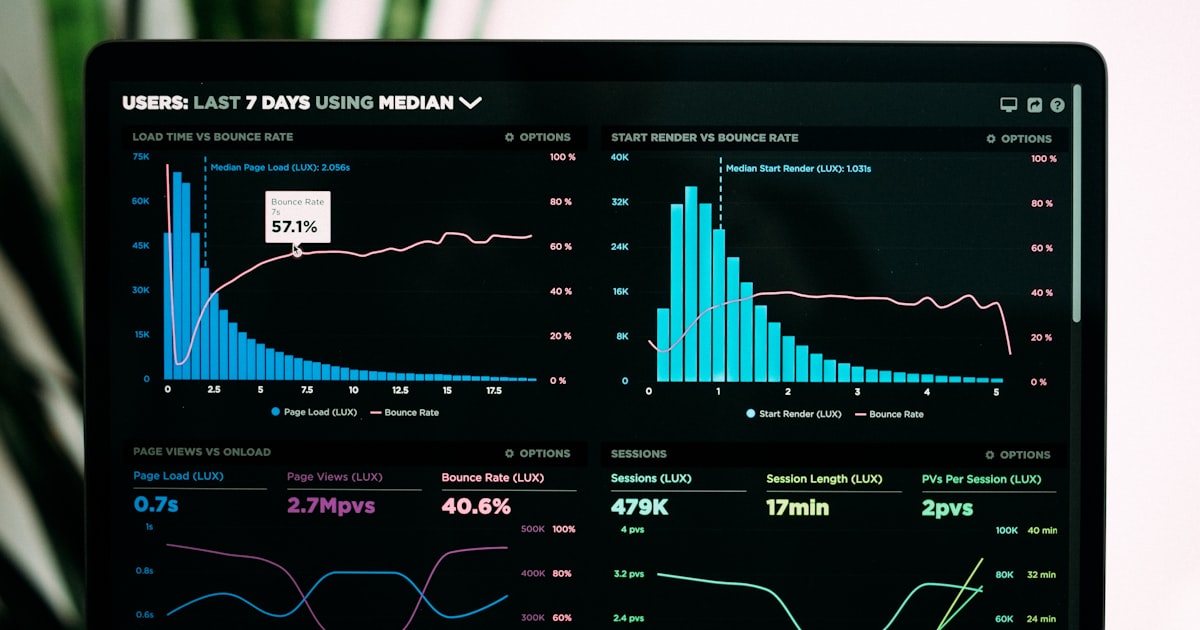
Companies using workforce analytics software are up to 6× more likely to have accurate, up-to-date data on employee performance. This advantage doesn’t come from choosing analytics over monitoring — instead, it comes from using monitoring data well enough that analytics becomes reliable.
The data pipeline looks like this: activity capture → aggregation → pattern recognition → insight → decision. Monitoring owns the first step, while analytics owns the rest. Take away the monitoring layer, and the analytics engine has nothing to work with. Conversely, take away the analytics layer, and the monitoring data accumulates without purpose.
A real-world scenario: A distributed team manager notices a productivity dip in weekly screenshot reports — monitoring data. So, they run TraqNext’s Work-Life Balance Heatmap across the team analytics. The report shows three team members logging sessions past 9pm every night for two weeks. They actually didn’t know until the analytics layer surfaced it. In short, the monitoring data captured the symptom, while the analytics explained the cause.
TraqNext’s Timeline and Activity Summary reports are built precisely at this overlap point. Timeline shows the full pattern of a workday — work time, idle time, break time, manual time, and leave time — in a visual drill-down format. Click any segment and you see the detail behind it. That’s monitoring data rendered in an analytical frame. Project Progress reporting does the same at the business level: total tracked hours, project cost, and six-month activity trends, automatically calculated from the hours employees log.
Payroll automation is perhaps the clearest example of why the overlap matters. For instance, TraqNext automatically calculates payroll from tracked hours — monitoring data feeding a high-stakes business workflow. That’s not a monitoring feature or an analytics feature; rather, it’s the pipeline working as intended.
See how this connects to broader workload management across your organisationIs There a Third Category Beyond Monitoring and Analytics?
Eighty-five percent of employees feel less trusted when monitored invasively, and low-trust environments experience up to 37% higher attrition (Microsoft Research / Gallup, via AnalyticsInsight, 2025). Together, those two statistics point to a structural problem with the monitoring vs analytics binary: it frames the conversation entirely around what the organisation gets from employee data, and it says almost nothing about what employees get.
There’s a third category that doesn’t yet have a widely adopted name. We call it workforce productivity intelligence: the continuous, ethically collected, privacy-respecting synthesis of activity data and predictive insight that empowers both managers and employees to improve how work actually gets done.
This isn’t a marketing distinction. It describes a genuinely different design philosophy. Monitoring-first tools are built for the manager’s dashboard. Analytics-first tools are built for the HR leader’s report. Workforce productivity intelligence is designed for the system — the feedback loop between data, insights, and human decisions that improves over time.
For enterprise buyers, this philosophy has practical implications. TraqNext supports full on-premises deployment — monitoring and analytics data never leaves your infrastructure. Additionally, GDPR compliance is built in, not bolted on, and white-labelling is available for organisations that need to operate under their own brand. And for enterprise IT teams managing complex rollouts, dedicated implementation support ensures setup doesn’t become a project in itself.
The workforce analytics market is growing at 12.9% CAGR, reaching $3.99B in 2025 (Research and Markets, 2025). Most of that growth is driven by organisations realising that monitoring data alone isn’t actionable. In other words, the market is moving toward intelligence — the question is whether the tools organisations choose are moving with it.
Which Does Your Organisation Actually Need?

Most organisations need both monitoring and analytics — but they often buy one without realising the other is available in the same platform. The right balance depends on your team structure, billing model, and the problems you’re actually trying to solve:
| Organisation Profile | Primary Need | Secondary Need |
|---|---|---|
| Remote / distributed team (10–200 people) | Monitoring: time, attendance, activity | Analytics: burnout risk, workload balance |
| Agency billing clients by the hour | Monitoring: project/task time, billing rates | Analytics: project cost vs. estimate |
| BPO / call centre | Monitoring: real-time activity, screenshots | Analytics: anomaly detection, team capacity |
| Enterprise HR team (200+ employees) | Analytics: predictive burnout, trends | Monitoring: attendance, payroll integration |
| Freelancer / solo operator | Monitoring: time logging, app usage | Analytics: personal productivity patterns |
TraqNext covers all five profiles from a single platform. Setup takes minutes and tracking data syncs immediately — there’s no configuration overhead before you start seeing results. For agencies, project-level and employee-level billing rates are both supported, with payroll auto-calculated from tracked hours, while enterprise teams benefit from on-premises deployment that keeps sensitive data within their infrastructure.
See how TraqNext compares to Insightful for enterprise-scale requirementsHow Predictive Burnout Analysis Changes What’s Possible
Burnout costs US employers an estimated $125–190 billion in healthcare spending every year (Harvard Business Review). Predictive Burnout Analysis is the clearest example of workforce analytics doing something employee monitoring simply cannot — converting activity patterns into an early warning signal for employee health before the damage is done, and before a valuable team member decides to leave.
Consider what monitoring data alone shows: an employee logged 11 hours today. That’s a fact. However, it doesn’t tell you whether those hours were focused or fragmented, whether they’ve been doing this for three weeks straight, or whether it’s affecting their cognitive load the next morning. TraqNext’s Predictive Burnout Analysis from multiple aspects captures four distinct signals:
- Context-Switching Fatigue Index — measures the cognitive cost of jumping between applications and tasks throughout the day. High context-switching is consistently linked to reduced deep-work capacity and accelerated mental fatigue.
- Digital Exhaustion Score — aggregates screen time intensity, after-hours digital activity, and sustained high-load periods into a single composite signal.
- Focus vs. Fatigue Trend — tracks whether an employee’s high-productivity hours are expanding or contracting over time. A shrinking focus window is often the first detectable sign of oncoming burnout.
- Work-Life Balance Heatmap — visualises when employees are working relative to their normal schedule, flagging systematic after-hours patterns that erode recovery time.
Together, these four dimensions give HR and people operations teams the data to intervene early — redistributing workload, adjusting team structures, or opening a support conversation before burnout reaches the point of resignation.
Four Dimensions of Predictive Burnout Analysis
TraqNext monitors each signal independently for a complete burnout risk picture
Risk
Each dimension is tracked independently and combined into a composite risk score.
Source: TraqNext Predictive Burnout Analytics feature, 2026
Frequently Asked Questions
What is the difference between employee monitoring and workforce analytics?
Employee monitoring tracks what each worker does — time on tasks, app usage, screenshots, and idle periods. Workforce analytics turns that data into organisation-wide insights: identifying trends, predicting burnout risk, and uncovering decisions that raw logs miss. Monitoring answers what; analytics answers why. Both are most valuable when they operate together in a single platform.
Is employee monitoring legal under GDPR?
Yes, when implemented transparently and with appropriate employee consent. GDPR-compliant platforms like TraqNext let admins control data collection — including the ability to disable or blur screenshots. Employees can see what data is tracked, and collection is limited to what’s needed for a valid business purpose. GDPR compliance is a built-in design requirement, not an afterthought.
Yes. Platforms like TraqNext capture monitoring data — time, activity, attendance, screenshots, and app usage — and surface analytics from it, including burnout risk scoring, anomaly detection, and project cost analysis, all in one unified dashboard. This removes the integration overhead and data mismatches that come from using separate tools. Workforce productivity intelligence combines real-time monitoring data and predictive analytics into continuous insights that help managers and employees work better — without invasive surveillance. It’s defined by three properties: transparency (employees know what’s tracked), prediction (the system surfaces risk before it becomes a problem), and empowerment (both sides of the employment relationship benefit from the data).Can one platform provide both employee monitoring and workforce analytics?
What is workforce productivity intelligence?
The Bottom Line
Employee monitoring and workforce analytics aren’t competing philosophies. Rather, they’re sequential layers of the same system — one captures the data, the other makes it meaningful. As a result, organisations that treat them as alternatives end up with either accountability without insight, or insight without the reliable data underneath it.
What the best teams are building toward isn’t a monitoring tool or an analytics platform. Instead, it’s a workforce productivity intelligence system: one that tracks activity transparently, analyses patterns predictively, and gives both managers and employees something actionable from the data. Notably, transparent monitoring reduces turnover by 14–18% (SHRM, 2025). That’s not a monitoring benefit or an analytics benefit — it’s an intelligence benefit.
- Monitoring and analytics are complementary — one captures data, the other makes it meaningful.
- Organisations using both layers move from reactive management to proactive workforce intelligence.
- The emerging standard is workforce productivity intelligence: transparent, predictive, and employee-respecting.
See how TraqNext combines activity monitoring, workforce analytics, and Predictive Burnout Analysis from multiple aspects in a single platform — with setup that takes minutes, not days.
Join teams that use TraqNext to track activity, surface burnout risk, and make smarter workforce decisions — all from one dashboard.
Explore today – full access, no credit card required!
Related articles
Continue reading with more posts from the same category.
